
Description
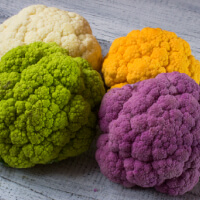
Cauliflower is a vegetable from the same family as broccoli, collard greens, and kale. Many people think cauliflower is the white version of broccoli because of how similar they look. They are both cooked the same way and both can be eaten raw. Although there are many similarities between the two, broccoli contains vitamin A while cauliflower does not. However, cauliflower has less calories than broccoli!

Possible Benefits
- Promotes good digestive health
- Helps maintain a healthy weight
- Decreases risk of metabolic syndrome
- May reduce cancer risk
- Good for immune function
- Beneficial for brain health

Required Equipment
Fresh supply of cauliflower
Cooking utensils (if cooking)

How to Do It
Can be eaten boiled, steamed, grilled, or baked. Also popular raw with dips such as ranch or hummus
Why it works
- High in fiber
- Reduces inflammation
- High in Antioxidants
- High in choline
- High in Vitamin C

Time Commitment
5-10 minutes
Preparation, cooking, and eating time varies by method used.

Suggested Frequency
Several times per week
Time of Day
With meals or as a snack
Celebrities Doing it
Blake Lively
Kim Kardashian
Mel B

Possible Side Effects
Excessive eating may cause:
Bloating and flatulence

Tips
- If you like cauliflower check out “HB - Eat Broccoli”
- Cauliflower can be colored white, orange, green or even purple!
- Cauliflower is made up of over 90% water
Supporting Studies
Expand Collapse- https://www.ncbi.nlm.nih.gov/pubmed/19335713
- https://www.ncbi.nlm.nih.gov/pmc/articles/PMC3705355/
- https://www.ncbi.nlm.nih.gov/pmc/articles/PMC3649719/
- https://www.ncbi.nlm.nih.gov/pmc/articles/PMC2737735/
- https://www.ncbi.nlm.nih.gov/pubmed/24920034
- https://www.ncbi.nlm.nih.gov/pmc/articles/PMC3783921/
- https://www.ncbi.nlm.nih.gov/pubmed/12569111
- https://www.ncbi.nlm.nih.gov/pmc/articles/PMC2518394/