
Description
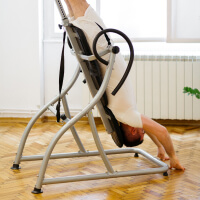
Inversion Therapy is a technique where you are suspended upside down for 1-5 minutes to stretch and relieve your spine.

Possible Benefits
- May relieve back pain
- May improve spinal health
- May improve flexibility
- In some cases, may reduce a need for certain spinal surgeries

Required Equipment
Inversion Table

How to Do It
- Securely harness yourself onto the inversion table.
- Lean back to hang upside down.
- Hang upside down for 1-5 minutes
- Slowly tilt back up
Why it works
Inversion therapy takes pressure off of your spine and offers relief to some forms of back pain. Inversion therapy may help with chronic lower back pain, circulation, and scoliosis.

Time Commitment
1-5 minutes per session.

Suggested Frequency
1-2 times per day.
Time of Day
Anytime.

Possible Side Effects
Hanging upside down for long periods of time may lead to an increase in blood pressure

Tips
- Consult a doctor before using inversion therapy if you have or have had any spinal injuries, or if you have high blood pressure and/or heart disease.
- Always do inversion therapy with someone - doing it by yourself can be dangerous.
- Limit yourself to a maximum of 5 minutes per session.
Supporting Studies and Articles
Expand Collapse- https://www.healthline.com/health/inversion-therapy
- https://www.mayoclinic.org/diseases-conditions/back-pain/expert-answers/inversion-therapy/faq-20057951
- https://www.webmd.com/back-pain/what-are-inversion-tables
- https://www.researchgate.net/publication/264742284_The_effect_of_inversion_traction_on_pain_sensation_lumbar_flexibility_and_trunk_muscles_strength_in_patients_with_chronic_low_back_pain
- http://iosrjournals.org/iosr-jmce/papers/ICAET-2014/me/volume-5/4.pdf
- https://pubmed.ncbi.nlm.nih.gov/22263648/