
Description
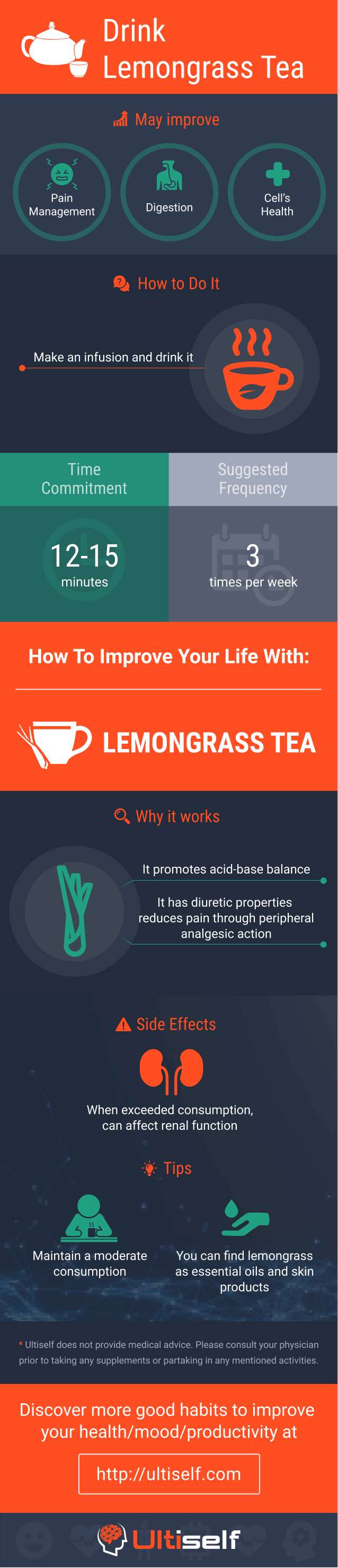
Lemongrass Tea is made from a plant that is used for different purposes in the kitchen, for different recipes. When ingested as a drink, it has the potential to help our stomach, since it has diuretic properties.

Possible Benefits
- May help digestion
- It has anti-inflammatory effects
- Reduces pain
- Combats the degradation of the body's cells

Required Equipment
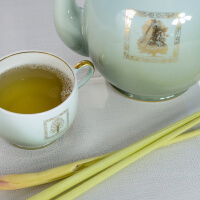
Lemongrass leaves or some kind of product containing the product for oral consumption.

How to Do It
Brew lemongrass in boiling water. Add water depending on the concentration of Lemongrass you want to have. Leave it in the fire until it boils, then leave it to stand for 10 minutes, and that's it. You can drink the tea hot or cold.
Why it works
Given its diuretic properties, it has the potential to promote the elimination of water and electrolytes from the body.
Through peripheral analgesic action, it can help to reduce pain.
Its consumption has also been associated with modifications in acid-base balance and electrolyte homeostasis.

Time Commitment
12-15 minutes

Suggested Frequency
3 times per week
Time of Day
Afternoon, best after a meal.

Possible Side Effects
Its exaggerated use can produce alterations in different systems of the body, especially in the renal function. In high doses it can cause dehydration, decrease of blood pressure, among other alterations.

Tips
- As with other teas of herbal origin, it is very important to maintain a moderate consumption, since its effects can be enhanced beyond a healthy level and cause damage.
- In addition to the use mentioned here, Lemongrass has also been used in other presentations, such as essential oils and skin products.
- This plant is native to the Asian continent. However, it has been cultivated in various areas of the world for some time, so it is quite common to find it in different countries.
Supporting Studies
Expand Collapse- Bioactive natural constituents from lemongrass tea and erythropoiesis boosting effects: potential use in prevention and treatment of anemia. https://www.ncbi.nlm.nih.gov/pubmed/25162916
- Lemongrass tea consumption and changes in Acid-Base Balance and Electrolyte homeostasis. https://www.heighpubs.org/hfns/afns-aid1016.php
- Effect of lemongrass tea consumption on estimated glomerular filtration rate and creatinine clearance rate. https://www.ncbi.nlm.nih.gov/pubmed/25440110
- Myrcene mimics the peripheral analgesic activity of lemongrass tea. https://www.ncbi.nlm.nih.gov/pubmed/1753786