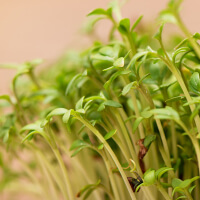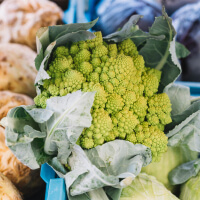

Description
Cruciferous vegetables are a group of plants rich in various nutrients, including folates, vitamins E, C and K, and beta-carotene, among others. Some of these vegetables are arugula, turnips, cabbage and radishes.

How to Do It
Add at least some of these vegetables to your daily diet. The best way to eat these foods is fresh, or steamed in salads, soups, or other preparations.

Possible Benefits
- Helps protect against oxidative stress
- Attacks certain types of bacteria
- May inhibit tumor growth
- Prevents skin cancer, pancreatic cancer, and other
- Improves cognitive function
- Prevents damage to the metabolism

Time Commitment
10-15 minutes

Why it works
- Cruciferous vegetables help increase the production of a very important substance that acts as an antioxidant in the cells and is called glutathione. For that reason, it also helps fight oxidative stress.
- Because of their isothiocyanate (ITC) content, cruciferous plants have great potential to suppress the growth of cells that could be cancerous.
- Specifically, these vegetables have an action against the bacterium Helicobacter pylori, known to cause gastritis and other gastric damage.

Suggested Frequency
Daily

Side Effects
Under moderate consumption, no significant side effects.
Required Equipment
Cruciferous vegetables: broccoli, cabbage, arugula, radish, turnip, cauliflower, watercress
Suggested Time of Day
With lunch

Tips
- Research results regarding cancer prevention are mixed, but show promise in affirming what type of diet has the potential to decrease cancer risk.
- Broccoli, in particular, is known to cause some stomach discomfort and gas. However, under moderate consumption this should not generate major complications.
Supporting Studies
Expand Collapse- Cruciferous Vegetables, Isothiocyanates, and Bladder Cancer Prevention. https://onlinelibrary.wiley.com/doi/abs/10.1002/mnfr.201800079
- Cruciferous Vegetables and Risk of Cancers of the Gastrointestinal Tract. https://onlinelibrary.wiley.com/doi/abs/10.1002/mnfr.201701000
- The Role of Cruciferous Vegetables and Isothiocyanates for Lung Cancer Prevention: Current Status, Challenges, and Future Research Directions. https://onlinelibrary.wiley.com/doi/abs/10.1002/mnfr.201700936
- Science of Flavor: Cruciferous Vegetables. https://www.hsph.harvard.edu/nutritionsource/2016/11/21/science-of-flavor-cruciferous-vegetables-brussels-sprouts/
- Cruciferous Vegetables as Antioxidative, Chemopreventive and Antineoplasic Functional Foods: Preclinical and Clinical Evidences of Sulforaphane Against Prostate Cancers. https://www.ncbi.nlm.nih.gov/pubmed/30652644
- Cruciferous vegetables and cancer prevention. https://www.ncbi.nlm.nih.gov/pubmed/12094621
- Harnessing the power of cruciferous vegetables: developing a biomarker for Brassica vegetable consumption using urinary 3,3′-diindolylmethane. https://www.ncbi.nlm.nih.gov/pmc/articles/PMC5220883/