
Definition
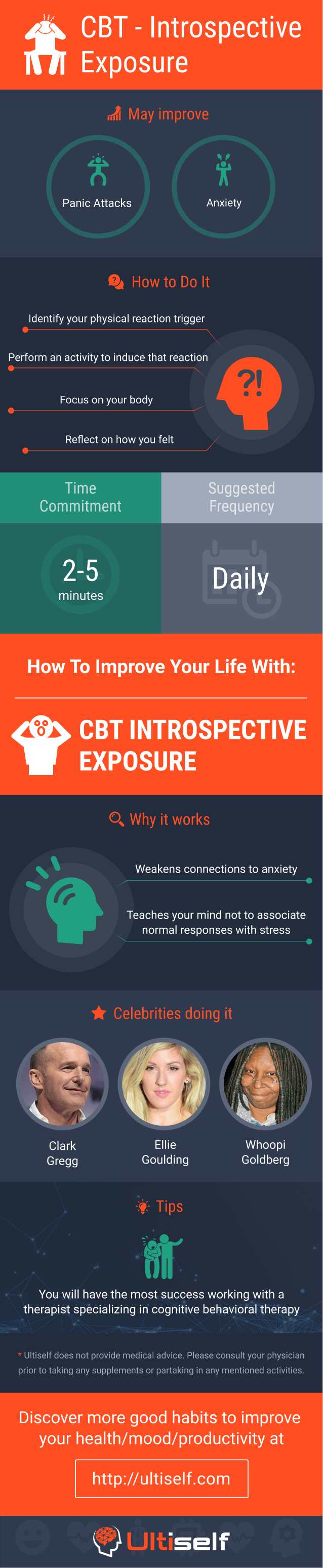
Interoceptive exposure is a form of exposure therapy typically used to treat panic and anxiety disorders. The focus is on understanding the body’s physical reactions to situations. It allows you to correctly identify physical reactions for what they are, rather than interpreting them as the onset of a panic attack.
Successful interoceptive exposure allows you to experience your body without experiencing unnecessary fear. If you always get jittery when a panic attack is starting, you can try to do something that makes you jittery. This helps your body to realize that when you get jittery it does not always mean a panic attack is on the way.

How to Do It
- Identify the physical reaction you’re responding to. Do you associate shortness of breath with an impending panic attack? Dizziness? Heart racing? These are some of the most common reactions associated with anxiety attacks.
- Perform activities to induce the reaction that you’re afraid of. This is at the heart of exposure therapies. For example, if heart racing is a trigger for you, try running in place for two minutes. If shortness of breath is your trigger, breathe through a straw for two minutes. If it becomes too much for you, feel free to stop!
- Reflect on the activity. What did you feel in your body? What did you think would happen? Was it as bad as you thought it would be? Could you have gone longer? You’re likely to discover that you’re stronger than you think and your body’s reactions don’t necessarily signal an impending panic attack.

Benefits
- May reduce anxiety
- May decrease panic attacks

Time Commitment
15-30 minutes

Why it works
Exposing your body to physical reactions that frighten you helps your mind learn that they are not as frightening as you expect them to be. When you experience these reactions and they are not followed by a panic attack, your mind is able to weaken the anxiety that may be associated with the reaction and eventually the anxiety may be gone forever.

Suggested Frequency
Once per week or as your therapist suggests
Gurus/Celebrities/Doing it
Ellie Goulding
Whoopi Goldberg
Clark Gregg
Related Products
CBT - Reframing; Play out worst case scenario
Suggested Time of Day
Any

Notes
While you can tackle interoceptive exposure on your own, you’re going to have the most success working with a therapist who specializes in cognitive behavioral therapy (CBT).
They can help you identify the physical states that trigger your anxiety, find activities that will safely mimic your physical symptoms, and help you talk through it afterwards.