
Description
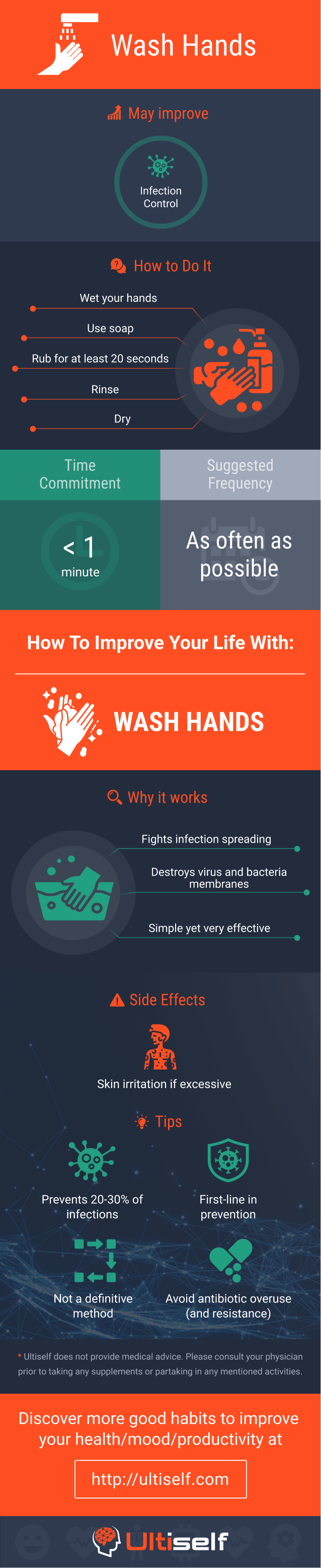
Handwashing is one of the simplest but effective actions you can practice for increased immunity. It is an initial line of defense to avoid infection by viruses and bacteria.

Possible Benefits
- Helps protect against infection
- Reduces the likelihood of infection by viruses and bacteria
- May protect the immune system
- Helps prevent overuse of antibiotics

Required Equipment
Soap and water.
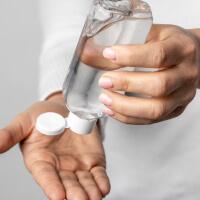
Ideally, hand sanitizer with at least 60% alcohol.

How to Do It
Follow these steps to wash your hands properly
- Wet your hands
- Apply soap and rub your hands together until you can see a lather. Rub the lather on all areas, and under the nails.
- Rub your hands together for at least 20 seconds.
- Then rinse your hands with clean water.
- Dry your hands with a clean towel.
According to the Centers for Disease Control and Prevention (CDC), this is a good technique for keeping your hands clean.
Why it works
- The main reason handwashing works is because soap breaks down the membranes of many viruses and bacteria, preventing them from entering and infecting our bodies.
- When we have microbes on our hands, we may spread them to our eyes or mouth, to food, surfaces and even to other people. Washing your hands is cutting the chain of infection.

Time Commitment
< 1 minute

Suggested Frequency
As often as possible.
Time of Day
Especially needed after going to the bathroom, after coughing or sneezing. Before, during, and after contact with food. Before eating, after being in contact with people with an infection.

Possible Side Effects
Sometimes hand washing with some products may deteriorate the skin.

Tips
- Handwashing can prevent about 30% of diarrhea-related illnesses and about 20% of respiratory infections.
- Hand washing is not a perfect or definitive method. But it is one of the best prevention techniques, so you should practice it.
- Being less exposed to viruses and bacteria may decrease the overuse of antibiotics, which can cause resistance to these medicines.
Supporting Studies and Articles
Expand Collapse- When and How to Wash Your Hands (CDC). https://www.cdc.gov/handwashing/when-how-handwashing.html
- Wash your hands. https://www.health.harvard.edu/newsletter_article/wash-your-hands
- Effect of Hand Hygiene on Infectious Disease Risk in the Community Setting: A Meta-Analysis. https://www.ncbi.nlm.nih.gov/pmc/articles/PMC2446461/
- Hand hygiene: Back to the basics of infection control. https://www.ncbi.nlm.nih.gov/pmc/articles/PMC3249958/
- Effectiveness of Alcohol-based solutions for Hand Hygiene: A Systematic Review. https://www.ncbi.nlm.nih.gov/pubmed/27820002
- Effectiveness of hand hygiene education among a random sample of women from the community. https://www.ncbi.nlm.nih.gov/pmc/articles/PMC5432779/
- Hand Washing (Hand Hygiene). https://www.ncbi.nlm.nih.gov/books/NBK470254/