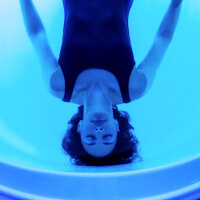

Definition
Also known as Flotation Restrictive Environment Stimulation Therapy, sensory deprivation involves entering a dark, soundproof, tank filled with skin-temperature water. This zen-like experience can bring immediate and lasting benefits for your well-being.

How to Do It
Enter a sensory deprivation tank for 30-45 minutes on a regular basis.
Some studies recommended a cycle that you can try:
Enter the tank for 45 minutes, twice a week for three weeks. Then take a break for a week.
Repeat these two stages for as long as you’d like. After 12 sessions (7 weeks) you should experience the benefits mentioned below, which may last up to 4 months.
Find a local sensory deprivation service at https://floatationlocations.com/

Benefits

Time Commitment
45 minutes

Why it works
- There are zero external distractions in sensory deprivation tank, allowing you to enter a meditative state more easily.
- Depriving the senses can give your brain a break, giving you a ‘refreshed’ and positive outlook.

Suggested Frequency
1-3 times a week

Side Effects
Prolonged and persistent sensory deprivation may cause anxiety, depression and reduced motivation [2].
Required Equipment
- A sensory deprivation tank
- You can find spas that have these tanks.
Gurus/Celebrities/Doing it
Joe Rogan
Kristen Wiig
Elle Macpherson
Jeff Bridges

Category Health/Productivity/Focus:
Health
Productivity
Focus
Suggested Time of Day
Any

Notes
- A sensory deprivation tank may be hard to come by and relatively expensive to access or purchase. Doing muscle relaxation exercises in a quiet environment is a cheap and convenient alternative. However, the tank is likely to produce better results.
- If you don't have a sensory deprivation tank there is a good chance that there are spas near you that have these. Simply sign up. It typically costs around $30 per session
Supporting Studies and Articles
Expand Collapse- https://kau.diva-portal.org/smash/get/diva2:1165475/FULLTEXT02.pdf
- https://www.cambridge.org/core/journals/advances-in-psychiatric-treatment/article/multisensory-therapy-in-psychiatric-care/DFE3A6312127D34F2CEE058749AB6E81/core-reader
- https://www.tandfonline.com/doi/full/10.1080/08870440412331337093