
Description
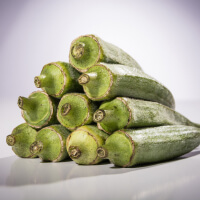
Okra is a plant of African origin that is high in vitamin C, K, riboflavin, thiamine, and retinol. It tastes similar to eggplant, and you can eat it raw or cooked.

Possible Benefits
- May improve the immune system
- May improve cardiovascular health
- May strengthen the overall health
- May improve digestion
- May improve energy

Required Equipment
Okra

How to Do It
You can eat okra in different ways:
- Raw: in salads, and other fresh recipes. Make sure you use a fresh enough plant. Okra tends to dehydrate quickly.
- Cooked: accompanied by other vegetables. You can use it to prepare soup, its gelatinous interior will give more thickness to the food.
Why it works
- Its high content of vitamin C improves the immune system's response to infection.
- Vitamin K is essential for blood clotting and keeping bones strong and healthy. It helps keep blood vessels in good condition and prevent heart problems.
- Riboflavin (vitamin B12) is needed to keep the body's cells functioning optimally. It also has the ability to transform the food we eat into energy for our daily activities.
- It has a high content of high-quality fiber, which helps improve the digestive process and prevent problems such as constipation.

Time Commitment
5-10 minutes

Suggested Frequency
1-2 times per week
Time of Day
Any

Possible Side Effects
In some cases, an upset stomach may occur.
Greater caution should be taken when using okra if you are regularly taking anticoagulant medications.

Tips
- To keep okra in the refrigerator for up to three days, wrap it in a paper bag.
- If you are going to eat okra fresh, it is best to choose the smaller, fresher ones.
- A typical Greek dish is okra in tomato sauce - try it!
- One study [1] found that okra seeds can reduce the levels of blood lactic acid (BLA) and urea nitrogen (BUN) and thus have anti-fatigue effects.
Supporting Studies and Articles
Expand Collapse- Antioxidant and Anti-Fatigue Constituents of Okra. https://pubmed.ncbi.nlm.nih.gov/26516905/
- Vitamin C and Immune Function. https://www.ncbi.nlm.nih.gov/pmc/articles/PMC5707683/
- Vitamin C and immunity: an assessment of the evidence. https://www.ncbi.nlm.nih.gov/pmc/articles/PMC1541262/
- The health benefits of vitamin K. https://pubmed.ncbi.nlm.nih.gov/26468402/
- Abelmoschus esculentus (L.): Bioactive Components’ Beneficial Properties—Focused on Antidiabetic Role—For Sustainable Health Applications. https://www.ncbi.nlm.nih.gov/pmc/articles/PMC6337517/
- The Effect of Okra (Abelmoschus esculentus (L.) Moench) Seed Extract on Human Cancer Cell Lines Delivered in Its Native Form and Loaded in Polymeric Micelles. https://www.ncbi.nlm.nih.gov/pmc/articles/PMC6855069/
- Effect of Abelmoschus esculentus (okra) on metabolic syndrome: A review. https://onlinelibrary.wiley.com/doi/abs/10.1002/ptr.6679