
Definition
Magnesium is an important mineral involved in nearly all bodily functions and deficiency therefore leads to a variety of health problems.

How to Do It
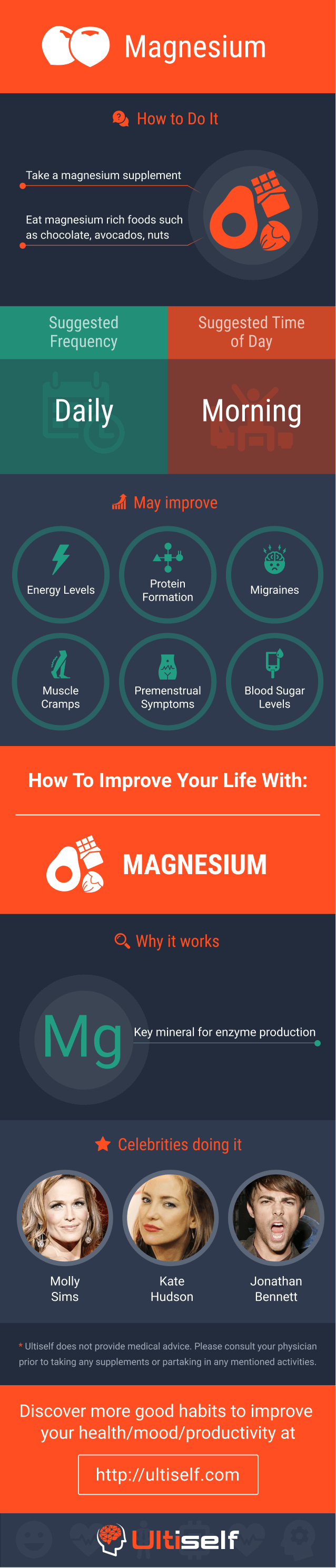
Take a magnesium supplement or eat foods rich in magnesium such as chocolate, avocados, nuts, and many more.

Benefits
- May increase levels of energy
- May improve protein formation
- May decrease the frequency of muscle cramps
- May reduce migraine frequency
- May improve blood sugar levels in diabetes patients
- May reduce premenstrual syndromes
- May reduce stress and anxiety

Time Commitment
Less than a minute

Why it works
Magnesium is involved in the production of more than 300 enzymes important for a variety of functions such as digestion, protein formation, bone development, nerve function, sleep, and many more (1).

Suggested Frequency
Daily

Supporting Studies and Articles
- Schwalfenberg, G. K., & Genuis, S. J. (2017). The Importance of Magnesium in Clinical Healthcare. Scientifica, 2017, 1–14. https://doi.org/10.1155/2017/4179326
- Office of Dietary Supplements—Magnesium. (n.d.). Retrieved August 29, 2019, from https://ods.od.nih.gov/factsheets/Magnesium-HealthProfessional/

Side Effects
- Too much of one mineral can lead to a deficiency of another
- People with kidney problems should not overdose with this supplement
- High dosage can cause diarrhea and abdominal cramps
Required Equipment
Magnesium supplement
Gurus/Celebrities/Doing it
Kate Hudson
Molly Sims
Jonathan Bennett
Suggested Time of Day
Morning
Notes
For optimal dosage, refer to this webpage: https://ods.od.nih.gov/factsheets/Magnesium-HealthProfessional/