
Description
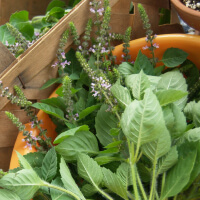
Holy basil, also known as tulsi or purple basil, is a variety of common basil. It is an adaptogen, widely used to reduce stress.

Possible Benefits
- May decrease stress level
- May improve your mood
- May prevent chronic stress
- May strengthen your immune system
- May improve cardiovascular health
- Antioxidant
- May reduce cholesterol level
- May improve productivity

Required Equipment
Holy basil leaves, supplement, or essential oil.

How to Do It
You can consume holy basil in an infusion. Simply boil water with a few leaves for a few minutes.
In Thai cuisine, there is a famous recipe called Pad kaphrao. It is simply beef, pork, or chicken fried with leaves of holy basil. You can try it!
You can also find it as a supplement, in capsules or essential oil.
Why it works
- Some of its active components, such as eugenol, carvacrol and ursolic acid help to decrease inflammation and reduce stress in the body. This makes it a powerful adaptogen.
- Eugenol is known to help reduce pain, fight some infections, and have antioxidant action.
- It can help improve cardiovascular health by reducing cholesterol and triglyceride levels.

Time Commitment
5-15 minutes

Suggested Frequency
2 times per week
Time of Day
Any
Consume it in the middle of the day to help you reduce stress and be more productive.

Possible Side Effects
May lead to blood low sugar. Headache, insomnia.

Tips
- Use it regularly to test its adaptogen effect.
- Do not use it at night because it can cause insomnia.
- If you use the capsules, you can hold the gel in your mouth for a few seconds to enhance the adaptogen effect.
Related Products
Rhodiola.
Supporting Studies and Articles
Expand Collapse- Adaptogens in Focus: Holy Basil. https://www.pharmaca.com/projectwellness/adaptogens-in-focus-holy-basil/
- The Clinical Efficacy and Safety of Tulsi in Humans: A Systematic Review of the Literature. https://www.ncbi.nlm.nih.gov/pmc/articles/PMC5376420/
- Dried leaf extract of tulsi [o. sanctum] reduces cardiovascular risk factors: result of a double blinded randomized controlled trial in healthy volunteers. https://www.researchgate.net/publication/305637533_Dried_leaf_extract_of_tulsi_o_sanctum_reduces_cardiovascular_risk_factors_result_of_a_double_blinded_randomized_controlled_trial_in_healthy_volunteers
- Anti-Inflammatory, gastrointestinal and hepatoprotective effects of Ocimum sanctum Linn: an ancient remedy with new application. https://pubmed.ncbi.nlm.nih.gov/24266685/
- Tulsi - Ocimum sanctum: A herb for all reasons. https://www.ncbi.nlm.nih.gov/pmc/articles/PMC4296439/
- Pharmacological and Toxicological Properties of Eugenol. https://www.ncbi.nlm.nih.gov/pmc/articles/PMC7227856/