
Description
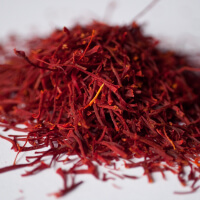
Saffron is a spice known mostly for its use as a condiment and to give color to foods. It is high in iron, potassium, and magnesium.

Possible Benefits
- Antioxidant
- Improves digestion
- Improves mood

Required Equipment
Saffron powder, capsules, or tablets.

How to Do It
The powder can be used to flavor foods, such as meat. You can also prepare an infusion. If you consume the capsules or tablets, follow the instructions on the product.
Why it works
- As it contains crocin, it acts as a natural antioxidant. It fights the damage produced by free radicals.
- The crocetin it contains increases bile production, which is important for proper digestion.
- It has an active component that influences the central nervous system, the safranal. It has been shown to have an antidepressant effect.

Time Commitment
2-5 minutes

Suggested Frequency
3-4 times per week
Time of Day
Noon

Possible Side Effects
Dry mouth, nausea, and dizziness are possible.

Notes
- If used as an antidepressant, follow product instructions or seek medical advice.
- It is currently being studied as a possible aid in the treatment of anxiety disorders.
- It can be grown at home. Go to your local seed supplier!
Supporting Studies and Articles
Expand Collapse- Comparison of Crocus sativus L. and imipramine in the treatment of mild to moderate depression: A pilot double-blind randomized trial. https://www.ncbi.nlm.nih.gov/pmc/articles/PMC517724/
- Safranal: From an Aromatic Natural Product to a Rewarding Pharmacological Agent. https://www.ncbi.nlm.nih.gov/pmc/articles/PMC3637901/
- Saffron: An Old Medicinal Plant and a Potential Novel Functional Food. https://www.ncbi.nlm.nih.gov/pmc/articles/PMC5943931/
- Saffron: A Natural Potent Antioxidant as a Promising Anti-Obesity Drug. https://www.ncbi.nlm.nih.gov/pmc/articles/PMC4665515/
- Therapeutic effects of saffron (Crocus sativus L.) in digestive disorders: a review. https://www.ncbi.nlm.nih.gov/pmc/articles/PMC4923465/
- Saffron: The Golden Spice with Therapeutic Properties on Digestive Diseases. https://www.ncbi.nlm.nih.gov/pmc/articles/PMC6567082/