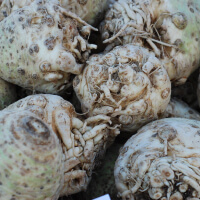

Description
The celery root is shaped like a turnip. Although not very attractive at first sight, it has great nutritional properties. It is very high in vitamin K, phosphorus, and vitamin C. In addition, it is known to improve the digestive process.

Possible Benefits
- May help improve digestion
- May lower cholesterol levels
- Can help improve the immune system
- Promotes the formation of red blood cells
- May improve the appearance of the skin
- Can help the body eliminate waste
- May improve mood
- May improve cognitive function

Required Equipment
Fresh celery root

How to Do It
Celery root can be eaten in different preparations such as juices, soups, salads, smoothies or purees. To get the most benefits, make sure you eat it as fresh as possible.
Why it works
- Celery root has high water content, about 80%, so it has a diuretic effect. This can help improve the digestive process, eliminate toxins and waste from the body and thus cleanse it. For that reason, it can improve the appearance of the skin.
- Its high content of vitamin C helps protect the immune system and regulate cholesterol levels.
- It also has some B vitamins, so it helps generate red blood cells.
- The potential of celery root to protect against cognitive decline and modulate neurotransmitter systems has been mentioned in two studies [3], [4]. This may also help regulate mood.

Time Commitment
5-10 minutes

Suggested Frequency
3-4 times per week
Time of Day
Any

Possible Side Effects
By having a diuretic effect, it can lower the levels of potassium and some minerals in the body. Do not exceed your intake and try to add other sources of potassium and minerals to your diet.
If you are taking anticoagulant medication, consult a doctor before consuming celery root. The vitamin K content may interfere with treatment.
It is not recommended for use during pregnancy.

Notes
- The aromatic celery plant is not the same as the celery root.
- Famous chef Diane Kochilas recommends the use of celery root in the kitchen.
- If you want a nutritious, low-calorie food, this is a great choice!
Supporting Studies and Articles
Expand Collapse- A Review of the Antioxidant Activity of Celery (Apium graveolens L). https://www.ncbi.nlm.nih.gov/pmc/articles/PMC5871295/
- Gastric antiulcer, antisecretory and cytoprotective properties of celery (Apium graveolens) in rats. https://www.tandfonline.com/doi/full/10.3109/13880200903280026
- Apium Graveolens Extract Influences Mood and Cognition in Healthy Mice. https://pubmed.ncbi.nlm.nih.gov/28205135/
- L-3-n-butylphthalide Improves Cognitive Impairment and Reduces Amyloid-Beta in a Transgenic Model of Alzheimer's Disease. https://pubmed.ncbi.nlm.nih.gov/20554868/
- Effects of Apium graveolens Extract on the Oxidative Stress in the Liver of Adjuvant-Induced Arthritic Rats. https://www.ncbi.nlm.nih.gov/pmc/articles/PMC4935245/
- Beneficial Effects of Celery (Apium Graveolens) on Metabolic Syndrome: A Review of the Existing Evidences. https://pubmed.ncbi.nlm.nih.gov/31464016/?from_term=Apium+graveolens&from_pos=1
- Chemistry, Technology, and Nutraceutical Functions of Celery (Apium Graveolens L.): An Overview. https://pubmed.ncbi.nlm.nih.gov/24188309/
- An Updated Phytopharmacological Review on Medicinal Plant of Arab Region: Apium graveolens Linn. https://pubmed.ncbi.nlm.nih.gov/28503047/