
Description
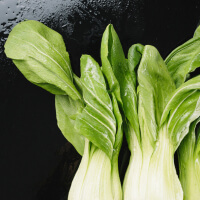
Bok choy is a type of Chinese cabbage. It has great nutritional value and according to the “Powerhouse Fruits and Vegetables” ranking, is the vegetable with the second most nutrients and health benefits. It is 95% water and contains vitamins A, C, and K.

Possible Benefits
- May prevent chronic disease
- May help you lose weight
- May improve digestion
- May improve cardiovascular health
- May strengthen your immune system
- May improve skin appearance

How to Do It
Bok choy can be eaten like any other vegetable, in salads, sandwiches, etc. It is a great alternative to accompany kimchi.
One of the most well-known ways to eat bok choy is with steamed fish. First, prepare the fish with lemon, ginger, sesame oil, and soy sauce. Then serve it with scallions, cilantro, and bok choy.

Why it works
- Its high content of nutrients and low amount of calories, makes it a perfect food to strengthen the body and prevent chronic diseases.
- Its low-calorie content makes it a good option for weight loss.
- It has a high content of fiber, which improves the process of digestion and decomposition of food.
- Its high content of vitamin C strengthens the immune system.
- Vitamin K helps strengthen the circulatory process.

Time Commitment
5-10 minutes

Suggested Frequency
1-2 times per week
Time of Day
Any

Possible Side Effects
It should be avoided during pregnancy.
Bok choy contains glucosinolates, plant defense compounds that can be toxic to humans if consumed in large quantities.

Tips
- Eat fresh bok choy to get all its nutrients.
- An individual portion of bok choy provides up to 50% of the vitamin C your body needs in a day.
- Do not confuse bok choy with chard. They have different nutritional properties.
- If you are trying to tone your body with exercise, bok choy is a great food supplement.
- Consumption of this and other cruciferous vegetables can decrease the risk of cardiovascular disease by up to 15%.
Supporting Studies and Articles
Expand Collapse- Defining Powerhouse Fruits and Vegetables: A Nutrient Density Approach. https://www.cdc.gov/pcd/issues/2014/13_0390.htm
- Glucosinolates from pak choi and broccoli induce enzymes and inhibit inflammation and colon cancer differently. https://pubmed.ncbi.nlm.nih.gov/24714741/
- The effect of green leafy and cruciferous vegetable intake on the incidence of cardiovascular disease: A meta-analysis. https://www.ncbi.nlm.nih.gov/pmc/articles/PMC4973479/
- Vegetable Bitterness is Related to Calcium Content. https://www.ncbi.nlm.nih.gov/pmc/articles/PMC2768385/
- Comparative Metabolic Profiling of Green and Purple Pakchoi (Brassica Rapa Subsp. Chinensis). https://www.ncbi.nlm.nih.gov/pmc/articles/PMC6099486/
- Attenuation of Carcinogenesis and the Mechanism Underlying by the Influence of Indole-3-carbinol and Its Metabolite 3,3'-Diindolylmethane: A Therapeutic Marvel. https://pubmed.ncbi.nlm.nih.gov/24982671/