
Description
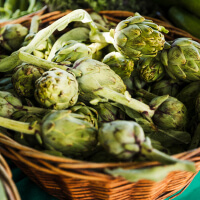
Artichokes are a bulb like flower bud from the thistle family. People compare their taste to a mixture of broccoli and asparagus. Eating artichokes may help provide your body with plenty of nutrients help alleviate high blood pressure and improve liver and digestive functions.

How to Do It
Artichokes look like a little flower with leaves that cover the fleshy core or “heart.” Most people avoid eating the fuzzy leaves and focus only on the hearts. Artichoke hearts can be steamed, boiled, baked, grilled, roasted, or sauteed. Cut the edges of the leaves. Rinse and clean the artichokes. Be sure to cook artichokes before eating them. Thorns can be located on the fuzzy leaves but become soft and disappear after cooking properly.

Benefits
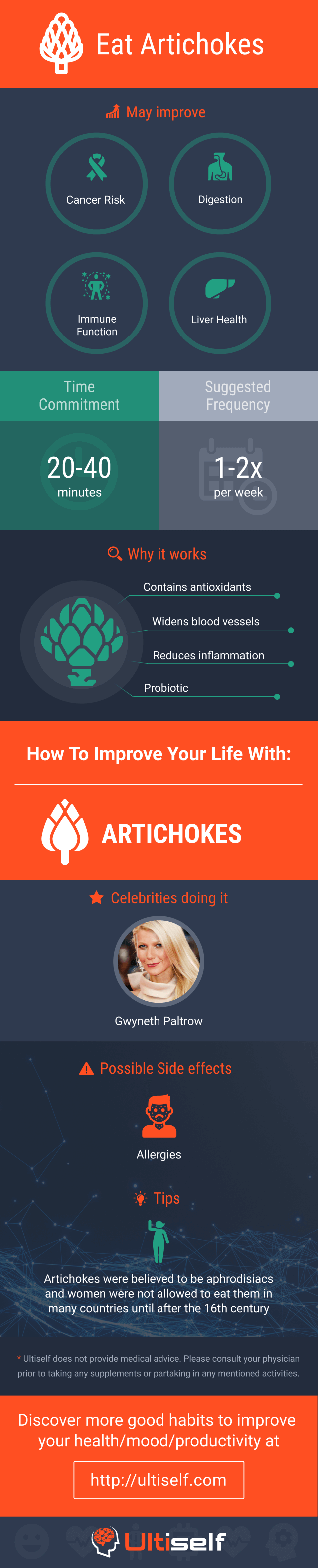
- Boost immune function
- Decrease risk of heart attack, diabetes, cancer, and stroke
- Aid in healthy digestion
- Prevents liver damage and improve liver function

Time Commitment
15 - 20 minutes

Why it works
- Thanks to its eupeptic properties, the consumption of artichokes improves the digestive process.
- One of the most important components of the artichoke is cynarin, a substance that promotes the production of bile by the liver. This has the advantage of reducing cholesterol levels, purifying the urinary tract, and regulating toxins in the blood.
- Antioxidant properties may impair cancer cell growth, and prevent cholesterol formation.
- May help lower blood sugar levels, specifically from the action of one of its components: inulin.
- Probiotic - supports the growth of good gut bacteria, which generates greater stability and regulation in the digestive and nutrient decomposition function.

Suggested Frequency
Once or twice a week

Side Effects
- Gastric upset/Flatulence from overconsumption
- Some people may have allergic reactions to any of the components of the artichoke, so any unusual changes after consumption should be reported to a professional.
Gurus/Celebrities/Doing it
Gwyneth Paltrow
Related Products
Eat Berries , Eat Asparagus, Eat Broccoli, Eat Garlic, Eat Arugula, Eat Cauliflower.
Suggested Time of Day
At mealtime when vegetables would be consumed.

Notes
- Women were not allowed to eat Artichokes in many countries until after the 16th century, as it was believed that they were aphrodisiacs.
- Artichokes are technically a flower bud that have not yet bloomed.
- There are many varieties of the artichoke, depending on the specific geographic location where one is located. For example, in France there are about 3 varieties, in Spain two varieties, and in the United States at least 3.
Supporting Studies and Articles
Expand Collapse- The total antioxidant content of more than 3100 foods, beverages, spices, herbs and supplements used worldwide. https://www.ncbi.nlm.nih.gov/pmc/articles/PMC2841576/
- Polyphenol compounds in artichoke plant tissues and varieties. https://www.ncbi.nlm.nih.gov/pubmed/22251096
- Efficacy of Artichoke dry extract in patients with hyperlipoproteinemia. https://www.ncbi.nlm.nih.gov/pubmed/10758778
- Artichoke leaf juice contains antihypertensive effect in patients with mild hypertension. https://www.ncbi.nlm.nih.gov/pubmed/22435514
- Appetite control and glycaemia reduction in overweight subjects treated with a combination of two highly standardized extracts from Phaseolus vulgaris and Cynara scolymus. https://www.ncbi.nlm.nih.gov/pubmed/21308825
- Efficacy of artichoke leaf extract in the treatment of patients with functional dyspepsia: a six-week placebo-controlled, double-blind, multicentre trial. https://www.ncbi.nlm.nih.gov/pubmed/14653829
- Artichoke leaf extract reduces symptoms of irritable bowel syndrome and improves quality of life in otherwise healthy volunteers suffering from concomitant dyspepsia: a subset analysis. https://www.ncbi.nlm.nih.gov/pubmed/15353023
- Artichoke leaf extract reduces symptoms of irritable bowel syndrome in a post-marketing surveillance study. https://www.ncbi.nlm.nih.gov/pubmed/11180525
- Efficacy of artichoke leaf extract in non-alcoholic fatty liver disease: A pilot double-blind randomized controlled trial. https://www.ncbi.nlm.nih.gov/pubmed/29520889