
Description
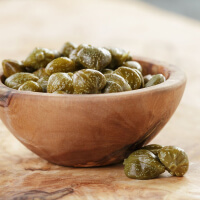
Capers are a plant normally consumed in Mediterranean cuisine. Generally, the flower bud of the plant is consumed. Capers are high in riboflavin, vitamin K, iron, and thiamine.

Possible Benefits
- May improve cardiovascular health
- May improve digestion
- May help with weight loss
- May strengthen the immune system

Required Equipment
Capers

How to Do It
Capers can be eaten like any other vegetable. Normally, it is consumed after being stored with vinegar and some salt. In Mediterranean cuisine, it is known to be used in while preparing fish.
Why it works
- Riboflavin or vitamin B2 is water-soluble, so it is not stored in the body and must be consumed regularly in the diet. It is essential for red blood cell production and normal body growth.
- Vitamin K is essential for the health of the circulatory system.
- Capers have a diuretic effect, which helps eliminate toxins from the body and can speed up weight loss.
- Capers have an antibacterial and antiviral effect, which supports the function of the immune system.

Time Commitment
5-10 minutes

Suggested Frequency
2 times per week
Time of Day
Any

Possible Side Effects
Capers are very high sodium, so they should be consumed in moderation. If you have diabetes, consult your doctor before consuming capers.

Tips
- For the greatest nutritional benefit, consume the plant as fresh as possible
- It's part of the Sirtfood Diet
- Capers are one of the main ingredients in tartar sauce. You can look up a recipe to make it yourself!
- Look for skincare products which are made with capers.
- It is ideal to consume with artichokes or cauliflower.
Supporting Studies and Articles
Expand Collapse- Capparis spinosa L. in A Systematic Review: A Xerophilous Species of Multi Values and Promising Potentialities for Agrosystems under the Threat of Global Warming. https://www.ncbi.nlm.nih.gov/pmc/articles/PMC5661020/
- Polyphenol Compounds and Biological Activity of Caper (Capparis spinosa L.) Flowers Buds. https://www.ncbi.nlm.nih.gov/pmc/articles/PMC6963175/
- Anti-inflammatory effects of caper (Capparis spinosa L.) fruit aqueous extract and the isolation of main phytochemicals. https://pubmed.ncbi.nlm.nih.gov/21105652/
- Bioactive components of caper (Capparis spinosa L.) from Sicily and antioxidant effects in a red meat simulated gastric digestion. https://pubmed.ncbi.nlm.nih.gov/17887802/
- Biflavonoids from Caper (Capparis spinosa L.) fruits and their effects in inhibiting NF-kappa B activation. https://pubmed.ncbi.nlm.nih.gov/21381749/
- Quercetin, Inflammation and Immunity. https://www.ncbi.nlm.nih.gov/pmc/articles/PMC4808895/
- The caper (Capparis L.): ethnopharmacology, phytochemical and pharmacological properties. https://pubmed.ncbi.nlm.nih.gov/20851750/